Affordable Drum Incinerator Revolutionizes Medical Waste Management in Tonj East, South Sudan

In post-conflict South Sudan, many rural and peri-urban health facilities faced a major challenge: the safe disposal of medical waste. Due to poor infrastructure, limited funding, and lack of access to modern incinerators, health facilities in places like Tonj East county in Warrap State, resorted to unsafe methods—open burning, shallow burial, or even discarding waste in nearby bushes.

These practices exposed healthcare workers, patients, and communities to serious risks, including infections, toxic smoke, and environmental contamination.

For many years now Tonj East County has relied heavily on one brick incinerator located in Kacuat PHCU to dispose off all medical waste across the 12 supported health facilities under the defunct Health Pooled Fund and the Current Health Sector Transformation Project (HSTP).

This gap was significant such that Community Social and Economic Development Agency (COSEDA) the current leading health partner in Tonj East, had a plan to bridge this gap while still keeping the intervention cost effective and user friendly.
Design and Construction

The COSEDA team engaged a local artisan to design the drum incinerator as follows:

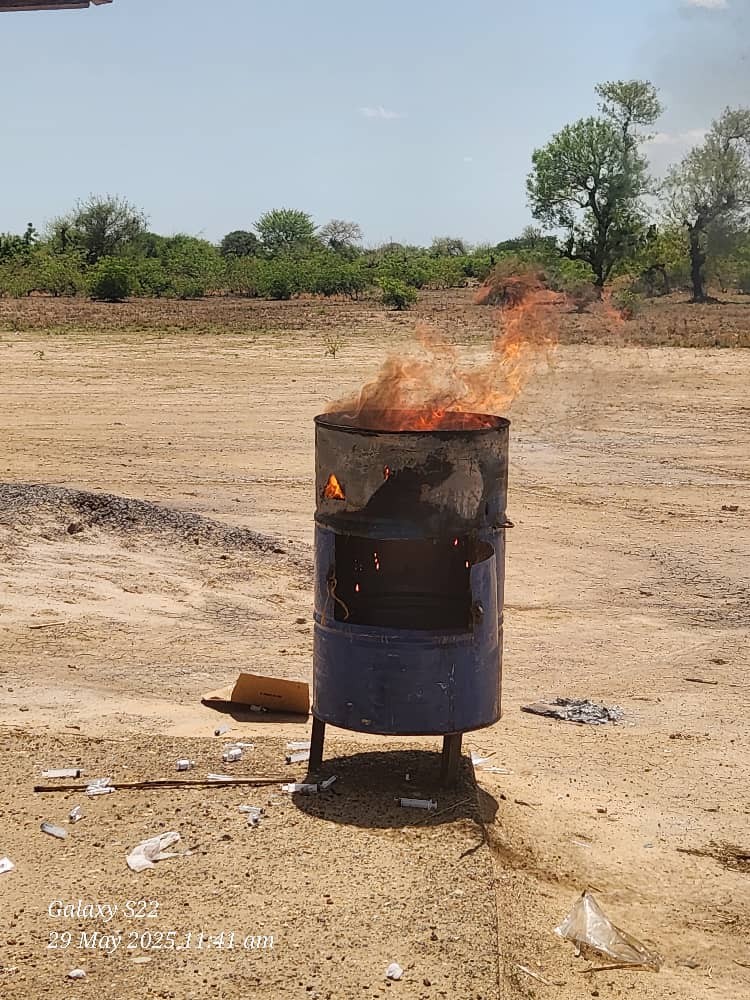
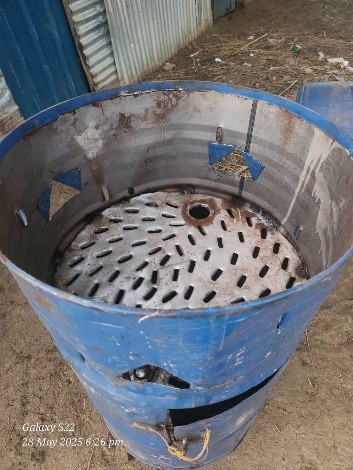
The incinerator was made using a 200-liter steel oil drum, modified to include:

  • Primary combustion chamber for burning waste
  • Secondary chamber to collect ash and residual incombustible waste.
  • Natural draft ventilation—no electricity required

Total cost per unit: approximately USD 150

All materials were sourced locally—steel drums from fuel depots and Welding equipment from local welders

Implementation

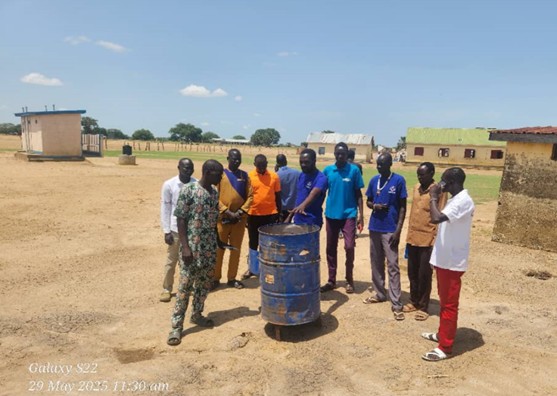
Three incinerators have so far been deployed to 2 Primary Health Care Centers (PHCC) and 1 PHCU namely Rumabuth PHCC, Paweng PHCC and Palal PHCU within Tonj East County HSTP supported health facilities.

Each center was trained on:

  • Waste segregation at the point of care.
  • Safe operation and loading of the incinerator.
  • Routine inspection and basic repairs.

The units processed 5–8 kg of waste per cycle, with a burn time of 1–2 hours using wood as fuel.

Expected Impact
Within next 6 months:

  • Open burning and dumping is expected to reduce by 95% in the afore-mentioned sites.
  • Health facility staff to report fewer injuries and infections related to improper waste disposal.
  • Community trust in local health centers expected to increase, as patients notice cleaner and safer environment.
  • Expansion expected to the rest of the health facilities in the next few weeks.

Key Success Factors

  • Cost-effective design with materials easily found across South Sudan
  • Community involvement in building and maintaining the units
  • Capacity building of healthcare workers
  • Low environmental impact compared to open burning

Conclusion

The improvised drum incinerator initiative has empowered health facilities in South Sudan to safely manage medical waste with limited resources. This low-cost, scalable innovation is now a beacon of practical public health engineering in one of the world’s most fragile healthcare environments.

Success story was written by Dr. Mwadali Mwaeni